 Tianran Trade
7 Best Reasons Realistic Mannequins Are Popular in Retail?
Why are realistic mannequins popular in retail stores? The answer begins with a familiar shopping moment: a customer pauses beside a window, studying a jacket, posture, and complete outfit. A lifelike mannequin makes clothing easier to imagine in daily life. It shows proportion, movement, texture, and styling more clearly than a flat display.
Visual merchandising educator Tony Morgan describes the principle well: “Visual merchandising is the art of displaying products in a way that makes them irresistible to shoppers.” Realistic mannequins support that process through human detail. Their facial expressions, body shapes, and natural poses can create stronger emotional connections. They also help retailers present complete looks, from footwear to accessories, without requiring lengthy explanations.
The seven best reasons include stronger window appeal, clearer product presentation, improved outfit coordination, and more memorable store experiences. They can also support inclusive representation when retailers select varied ages, body types, and appearances. In a busy shop, one convincing figure may guide attention toward a new collection within seconds. That matters.
Yet realism is not automatically effective. An expensive mannequin can still look stiff, poorly styled, or disconnected from local shoppers. Lighting, posture, cleanliness, and clothing fit remain essential. Retail teams should observe customer reactions, test different arrangements, and adjust displays regularly. A mannequin cannot replace thoughtful merchandising. It only makes that thinking visible.
This guide examines why realistic mannequins continue attracting retailers, while acknowledging their limits, costs, and maintenance demands. Their popularity is practical, emotional, and sometimes imperfectly understood.
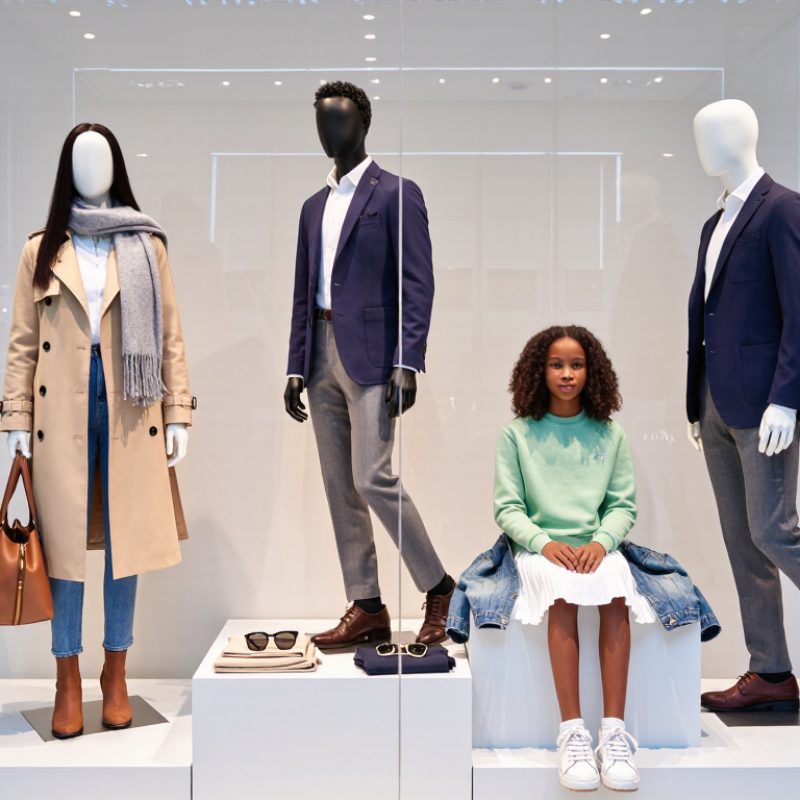
Product Fit and Drape Visibility Support POPAI’s 76% In-Store Finding
Realistic mannequins remain popular because shoppers need to see clothing on a human-shaped form. A jacket’s shoulder line, trouser break, and sleeve length become easier to judge. Flat displays show color well, but they often hide fit and movement. A carefully styled mannequin can reveal how fabric hangs near the waist, hip, and knee.
This matters in stores. A widely cited POPAI finding reports that 76% of shoppers find products in-store. That figure supports a practical idea: visible product details can guide discovery and reduce hesitation. When mannequins place complete outfits near entrances, shoppers can notice matching pieces quickly. They may also understand the intended use, such as a loose shirt for warm weather or a structured coat for commuting.
The effect is not automatic. Poorly fitted garments create stretched seams, twisted collars, or unnatural folds. Those details can weaken trust. Retail teams should check the display from several walking angles and under real store lighting. Measurements also deserve care, because a single survey cannot explain every shopper or product category. Still, hands-on testing often shows that realistic proportions improve drape visibility and styling clarity. Small changes help. A lowered sleeve, visible waistband, or natural stance may make the outfit feel more wearable. Yet mannequins can still oversimplify real bodies, so inclusive sizing and honest product information should remain part of the display experience.
7 Best Reasons Realistic Mannequins Are Popular in Retail? - Product Fit and Drape Visibility Support POPAI’s 76% In-Store Finding
| Reason | Retail Function | Observable Customer Value | Relevant Metric or Finding | Best Application |
|---|---|---|---|---|
| 1Shows product fit | Realistic body proportions make garment length, ease, silhouette and proportion visible without requiring a fitting-room visit. | Shoppers can assess how a complete outfit is intended to sit on the body, helping reduce uncertainty before handling the product. | Directly observable Fit and silhouette are demonstrated visually at the point of display. |
Apparel windows, feature walls and new-collection presentations. |
| 2Reveals fabric drape | Posed forms display the fall, stretch, gathers, volume and movement of fabrics more clearly than a flat shelf presentation. | Customers gain a faster understanding of how materials behave when worn, especially for fluid, layered or structured garments. | Product demonstration Material behavior is communicated through three-dimensional presentation. |
Dresses, knitwear, outerwear, flowing fabrics and layered looks. |
| 3Creates outfit context | Head-to-toe styling connects separate products into a coherent look, including apparel, footwear and accessories. | Customers can identify complementary items and understand how individual products work together. | Cross-merchandising One display can communicate several related product categories. |
Seasonal campaigns, coordinated collections and capsule edits. |
| 4Improves visual stopping power | A human-shaped, three-dimensional display adds height, shape and visual focus to otherwise flat retail fixtures. | It helps organize the shopper’s attention and makes key merchandise easier to notice from an aisle or storefront. | POPAI finding: 76% POPAI has reported that 76% of purchase decisions are made in-store. |
Storefront windows, entrance zones and high-traffic promotional areas. |
| 5Communicates a lifestyle | Facial features, posture and styling can express an intended occasion, activity or customer identity. | Shoppers receive emotional and contextual cues about where, when and how the products may be used. | Qualitative visual cue Meaning is conveyed through pose, styling, setting and product combination. |
Workwear, occasionwear, activewear, travel edits and youth-oriented displays. |
| 6Supports faster comparison | Multiple realistic forms can present alternative colors, silhouettes or coordinated outfits at a consistent viewing height. | Customers can compare options quickly without unfolding or rearranging every item on a rack. | Reduced search effort Products are presented in a standardized, easy-to-scan format. |
Color stories, good-better-best displays and assortment launches. |
| 7Strengthens brand-neutral store storytelling | Realistic mannequins provide a repeatable visual structure for communicating a retailer’s collection theme without relying only on signage. | A consistent display language can make departments feel more organized and improve continuity between windows and interior fixtures. | Merchandising consistency Repeated poses, styling rules and placement standards support a coherent presentation. |
Department stores, multi-category retailers and seasonal floor-set changes. |
Evidence note: The 76% figure is commonly cited from POPAI research on in-store purchase decision-making. The remaining entries describe observable merchandising functions rather than unsupported sales-lift claims; results vary by store format, product category, styling quality, traffic and display placement.
FAQS
They show shoulder lines, sleeve lengths, waist fit, and trouser breaks more clearly.
Complete outfits near entrances help shoppers notice matching pieces quickly.
No. Poor styling can create stretched seams, twisted collars, or unnatural folds.
Staff should inspect the outfit from several walking angles.
Varied waists, shoulders, and inseam lengths can reveal possible fit concerns.
Displays should include clear measurements, fabric details, and fitting-room feedback.
Reusable forms can support quick changes without rebuilding an entire display.
The same form can present travel clothing on Monday and workwear later.
One widely cited finding says 76% of shoppers find products in stores.
Conclusion
Why are realistic mannequins popular in retail stores? They help shoppers understand how clothing fits, falls, and moves on a human-shaped form, making product selection easier and more confident. By presenting complete outfits at eye level, they support personalized styling, encourage customers to imagine themselves wearing the products, and create stronger visual attention and brand recall without relying on excessive signage. Realistic proportions can also address common fit concerns by representing a wider range of body shapes and helping shoppers feel more included.
In addition, realistic mannequins make it easier for retailers to create flexible visual stories. Their poses, clothing, and accessories can be updated quickly for seasonal launches, promotions, or changing customer preferences, reducing display waste and saving setup time. They can also improve the use of valuable store space by turning ordinary product displays into clear lifestyle scenes. Overall, their combination of practical product presentation, emotional engagement, inclusivity, and adaptability makes them an effective tool for modern retail environments.
