 Tianran Trade
How to Prevent Hanger Racks from Rusting or Getting Damaged
Hanger racks support daily garment storage, but moisture, dust, and excessive loads can weaken them over time. A damp laundry room, leaking roof, or wet cleaning cloth may leave small rust spots near joints and wheel brackets. Those marks often spread beneath chipped paint. Understanding “How to prevent hanger racks from rusting or damage” starts with recognizing these early warning signs.
Practical maintenance combines correct material selection, regular cleaning, and sensible handling. Stainless steel, galvanized steel, and well-applied powder coatings usually resist corrosion better than untreated metal. However, no finish lasts forever. A facility manager should check welds, hooks, castors, bolts, and base corners during routine inspections. Look closely. Tiny orange stains matter. Dry racks completely after cleaning, especially around enclosed tubes and connection points. Avoid abrasive brushes that expose bare metal. Keep clothing loads within the manufacturer’s stated capacity, because bent frames can damage protective coatings and create unstable storage conditions.
Small habits make a difference.
Reliable care also includes recording inspection dates, cleaning methods, and repaired areas. Manufacturer guidance should remain the primary reference because coatings and rack designs vary. In busy workplaces, rushed inspections can miss corrosion hidden behind garments or beneath wheel assemblies. That is a realistic weakness, not a reason to ignore maintenance. A simple checklist, trained staff, and timely touch-up repairs can prevent minor damage from becoming an expensive replacement. The most effective approach is consistent, observable, and adapted to the rack’s environment.
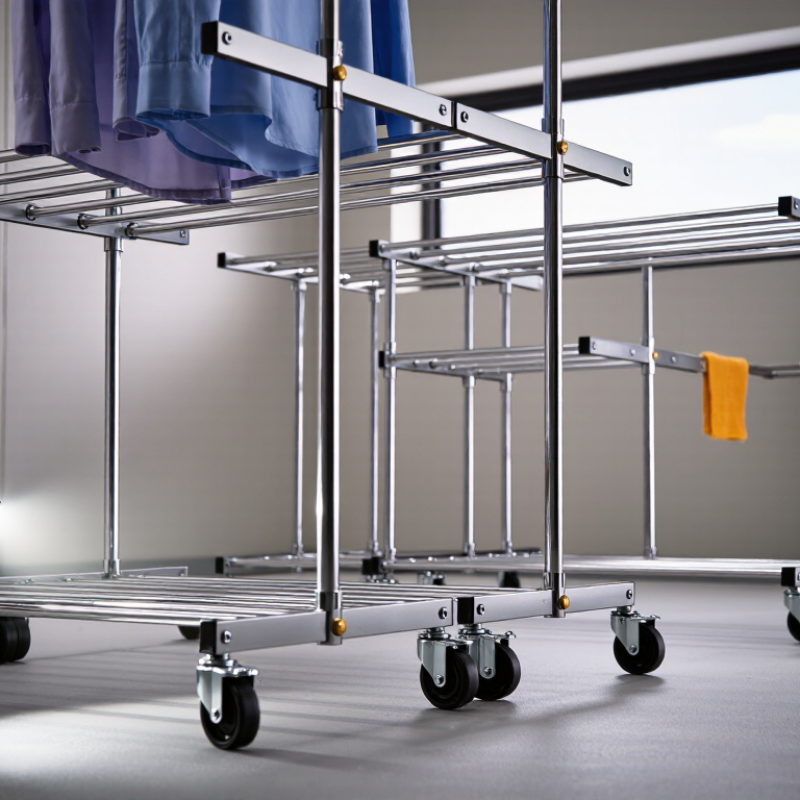
Identify Common Causes of Hanger Rack Rust and Structural Damage
Hanger racks usually rust where moisture stays trapped: beneath shelf lips, around welds, and at scratched coating edges. Leaking roofs, damp floors, condensation, and frequent wet cleaning all raise exposure. Salt carried in on shoes or packaging can make the problem worse. Corrosion often starts as a small orange spot, then spreads under a blistered finish. Easy to miss.
Mechanical damage has different clues. Repeated impacts from carts or forklifts can bend uprights, loosen connections, and chip protective coatings. Overloading or unevenly distributed garments may also strain rails and joints. The NACE International IMPACT study estimated corrosion costs the global economy US$2.5 trillion annually, about 3.4% of global GDP; that figure covers many industries, not hanger racks specifically. Still, it shows why routine prevention matters. OSHA warehouse guidance also emphasizes keeping storage areas orderly and reporting damaged equipment. A quick visual check helps, but it cannot reveal every weakened joint. People sometimes notice damage only after a rail starts to sag. That is not ideal.
| Problem | Common Cause | Warning Signs | Prevention and Maintenance | Inspection Frequency |
|---|---|---|---|---|
| Surface rust | Moisture, condensation, or prolonged exposure to humid air can corrode unprotected or damaged steel. | Orange or reddish-brown spots, especially around joints, welds, and scratches. | Keep racks dry, improve ventilation, wipe off standing water, and touch up damaged protective coatings with a suitable coating for the rack material. | Monthly, and after leaks or water exposure |
| Accelerated corrosion | Salt, cleaning chemicals, or other corrosive residues remain on the rack surface. | Pitting, flaking finish, rough patches, or corrosion concentrated near floors and cleaning areas. | Use cleaning products suitable for the rack finish. Rinse or wipe away residues as directed, then dry the rack thoroughly. | Monthly; more often in corrosive environments |
| Coating damage | Repeated impacts, scraping, abrasive tools, or careless handling chip paint or protective finishes. | Exposed metal, chipped paint, deep scratches, or peeling coating. | Handle garments and equipment carefully, avoid abrasive cleaning methods, and repair coating damage promptly after cleaning and drying the area. | During routine visual checks |
| Bent rails or crossbars | Loads exceed the rack's rated capacity, or weight is concentrated in one area. | Sagging bars, uneven rails, distorted connectors, or difficulty moving the rack. | Follow the manufacturer's load rating, distribute garments evenly, and do not use the rack as a ladder or support for unrelated items. | Before loading and during use |
| Loose or failing joints | Fasteners loosen through movement, vibration, repeated assembly, or impact. | Wobbling, shifting joints, missing fasteners, or clicking sounds when the rack is moved. | Place the rack on a stable, level surface. Check and tighten fasteners according to the assembly instructions; replace damaged parts rather than improvising repairs. | Monthly and after relocation |
| Cracked welds or frame members | Repeated overloading, impact, fatigue, or corrosion weakens structural components. | Visible cracks, separated joints, sharp deformation, or sudden instability. | Remove the rack from service immediately. Have it assessed and repaired by a qualified professional, or replace it if its safe condition cannot be confirmed. | Visual check monthly; immediately after impact |
| Damaged wheels or feet | Debris, uneven floors, overloading, or impacts damage casters and support feet. | Wheels that jam or wobble, cracked housings, missing brakes, or a rack that rocks on the floor. | Keep wheels clear of lint and debris, use the brakes when stationary, and replace worn or damaged casters with compatible parts. | Monthly and before moving a loaded rack |
| Instability or tipping | Uneven flooring, a narrow or unbalanced load, or pushing a rack from an unsuitable point. | Leaning, rocking, lifted wheels, or movement that feels difficult to control. | Use the rack on a level surface, balance loads across the frame, keep heavy items low where the design allows, and move it slowly without exceeding its capacity. | Before each move |
FAQS
Wipe it weekly with a soft cloth and mild detergent. Dry the frame, including welds, screw heads, and corners. Don’t skip the back feet.
Look for chipped paint, loose fasteners, bent bars, and rough patches. Tighten loose bolts with the correct tool. Replace parts that no longer hold securely.
Keep the rack away from standing water and leaking pipes. Dry wet garments before hanging them, and leave space for airflow. Wipe splashes promptly.
Moisture can linger around seams, wheel mounts, and hollow-looking corners. Check them closely. I still sometimes miss the back feet.
Follow its stated load limit rather than estimating by eye. Spread garments evenly, with some space between heavy coats. Remove hangers if a bar dips.
Move it by the frame, not by pulling a rail or pushing against clothes. Lift its wheels over hard-floor thresholds. Avoid jolting it.
Keep it away from doorways and busy corners where bags or carts may hit it. Give it room. That space can be inconvenient.
Keep a dated maintenance log. Notes about dampness or repeated wear can reveal patterns. Check more often in humid rooms or near entrances.
Conclusion
Knowing how to prevent hanger racks from rusting or damage starts with understanding what causes deterioration. Moisture, humidity, corrosive substances, excessive weight, impacts, and rough handling can weaken protective coatings or place stress on rack components. Choosing materials suited to the environment and applying durable, corrosion-resistant finishes can help protect racks from rust and extend their service life.
Regular care is equally important. Clean racks with appropriate products, dry them thoroughly, and follow a consistent maintenance schedule, especially in damp or dusty areas. Distribute garments and other items evenly, stay within the rack’s load capacity, and handle components carefully when moving or adjusting them. Inspect the rack periodically for rust, loose connections, bent sections, or worn finishes. Repair minor issues promptly, and replace damaged parts when they can no longer provide stable support. These habits help maintain safety, appearance, and reliable performance over time.
