Choosing the best child mannequins in China starts with the shop floor, not a supplier’s catalogue. A mannequin should match the age range, clothing sizes, and styling your customers actually see. Check shoulder width, torso length, hip shape, and standing height against a real garment sample. A sleeve that pulls or trousers that hang awkwardly can make good clothing look poorly made. Small details matter. Consider pose, facial features, skin tone, and whether the figure supports outfit changes without repeated tool use. For compact stores, lightweight, stable models are often easier to reposition. But the lightest option is not always the safest or most durable.
Purchasing from China can offer broad choices in materials, finishes, and customization, yet product photos alone rarely show fit or surface quality. Ask for dimensional drawings, close-up finish images, packaging details, and a sample when the order justifies it. Confirm in writing how the supplier handles color consistency, repairs, replacement parts, and transit damage. Compare fiberglass, plastic, and other materials by weight, finish, maintenance, and intended use—not by price alone. How to choose mannequins for children’s clothing stores depends on practical checks as much as appearance. Even experienced buyers can miss a mismatch. A useful precaution is to test one dressed sample under the store’s actual lighting before committing to a large batch. This guide outlines what to inspect, what to ask Chinese manufacturers, and which trade-offs deserve a second look.
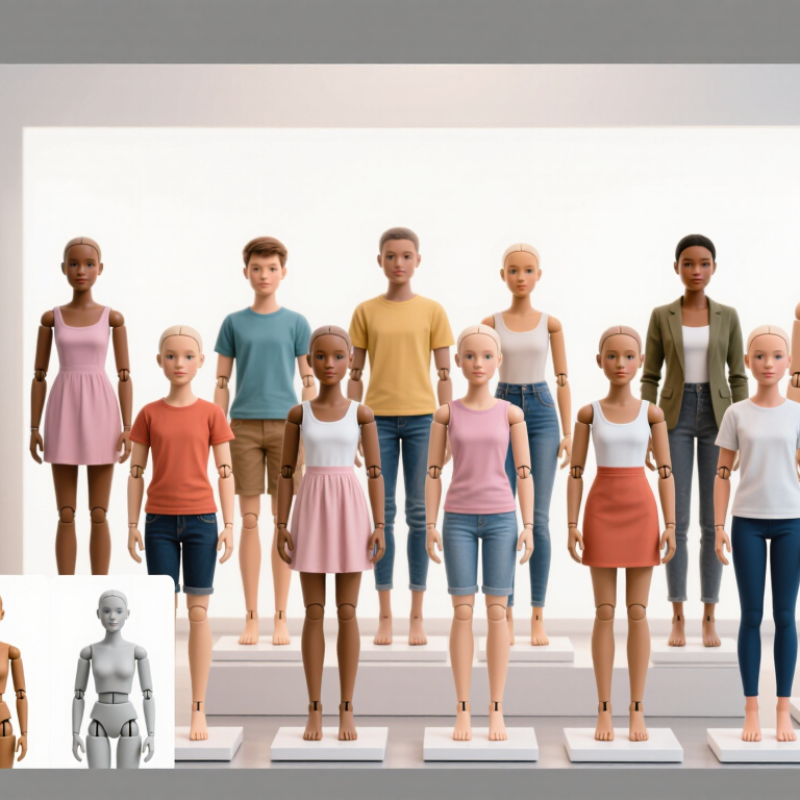
Before comparing child mannequins in China, decide what the display needs to achieve. A shop window needs a clear silhouette that shoppers can recognize from several meters away. An in-store display may need realistic proportions and quick clothing changes. Note the location, viewing distance, and garments. A mannequin for school uniforms should show how a shirt sits, not merely look appealing.
Define the target age range using clothing measurements, not age labels alone. Children of the same age can differ in height and build, and size conventions may vary between suppliers. Compare chest, waist, hip, and height measurements with the garments you plan to display. Ask for the mannequin’s actual dimensions and check how sample clothing fits. Small details count. Sleeve length can look wrong even when the torso fits.
Match the pose and finish to the audience. A relaxed stance may suit younger children’s clothing, while a simple, upright pose can make older children’s outfits easier to inspect. Check that the base feels stable and does not block shoes or hems. Catalog images can be misleading; lighting and clothing change how proportions appear. If possible, review a dressed sample at the intended viewing distance. The back matters too, especially when staff need to change outfits often.
Compare mannequin types before focusing on appearance. Full-body models show complete outfits, while torso forms use less floor space and work well for tops. Realistic child mannequins can help shoppers picture proportions. Abstract forms keep attention on the clothing.
Check shoulder width, waist, and inseam against the size range you sell. Small measurement differences can make sleeves pull or trousers hang unevenly. For poses, a neutral standing position suits everyday displays. Bent arms or a gentle walking stance add movement, but may limit how garments sit.
Tips: Ask for exact measurements and clear photos from several angles. Check the base, joints, and garment-opening details. Keep notes.
Material affects handling and display life. Fiberglass often feels sturdy, but can be heavy to move. Plastic is lighter and may be easier to reposition, though thinner sections can flex. Resin can capture fine facial details, but a detailed finish is not always useful for basic retail displays. Ask how the surface cleans and whether scratches can be repaired. A matte finish may reduce glare under bright shop lights. I would not choose by material name alone; build quality varies, and samples can reveal flaws that product photos miss. Keep the pose practical for the clothes you actually display.
When comparing child mannequins in China, check measured dimensions rather than relying on age labels. Children of the same age can differ noticeably in height, shoulder width, and proportions. Ask for a measurement chart covering height, chest, waist, hip, and inseam, then compare it with the clothing range you plan to display. A chart can look precise and still hide measurement differences. Request the supplier’s measuring method, and verify a sample with a tape measure before ordering in quantity.
Stability matters on busy showroom floors. Check that the base sits flat and does not rock when a garment is adjusted. Small details matter. A broad, well-fitted base and a secure support rod can reduce tipping, especially when the mannequin wears heavier outerwear. Test it on the actual floor surface, not just a warehouse table. That test may feel overly cautious, but uneven tiles and thick rugs can change how a stand behaves.
Inspect safety features closely. Look for smooth edges, covered joints, and fasteners that stay firmly in place during dressing. Ask what materials are used and request relevant product safety documentation; do not treat a verbal assurance as proof. Check the finish for chips, strong odors, or rough patches, particularly around hands, necks, and feet. Packaging also deserves attention: a cracked base or loose fitting after transit can create hazards and delay a display setup.
Choosing a child mannequin in China starts with supplier evidence, not polished catalogue photos. Request a production sample and inspect it under ordinary store lighting. Check the face, fingers, seams, base, and paint for rough edges, uneven color, or visible pinholes. Details matter. Ask for the resin or fiberglass specification, coating information, inspection records, and packaging tests. ISO 9001 certification can indicate a documented quality-management system, but it does not guarantee a flawless product. Compare recent inspection reports and ask how defects are recorded and corrected. A sample may look perfect on a showroom stand yet arrive scratched after shipping.
Customization should be checked against a written drawing. Confirm age proportions, pose, skin tone, wig attachment, mounting points, and whether clothing fits the final measurements. Request approval samples before full production. China’s National Bureau of Statistics reported that manufacturing value added grew 5.0% in 2023, in its Statistical Communiqué on National Economic and Social Development. That broad figure describes the sector, not any individual supplier. Keep that distinction clear. Ask shortlisted factories for lead-time records, minimum order quantities, and a sample-change schedule; compare the answers in writing. One detail is easy to miss: custom colors can vary between batches, so specify an acceptable color range and review a production sample before shipment.
| Evaluation Area | What to Assess | Evidence to Request from the Supplier | Suggested Buyer Benchmark | Suggested Weight |
|---|---|---|---|---|
| Age and size suitability | Whether the mannequin’s proportions suit the intended children’s clothing range. Age labels alone do not guarantee consistent dimensions between suppliers. | A dimension sheet showing height, chest, waist, hip, shoulder width, and key garment-fit measurements for each model. | Compare measurements with your target garments and approve a physical sample before confirming bulk production. | 15% |
| Dimensional accuracy | Consistency between the approved specification, pre-production sample, and finished units. | Measurement records for the sample and a written inspection plan for production. | Set tolerances in the purchase specification. A buyer may propose a target such as ±5 mm for selected key dimensions, subject to sample confirmation and supplier agreement. | 12% |
| Material selection | Suitability of the body material for the display environment, desired weight, finish, and expected handling. Fiberglass-reinforced material and plastics such as ABS or PE are options used for display forms; construction varies by product. | Written material and construction details, including the material used for the body, joints, base, and internal supports. | Choose material based on the intended use; confirm weight, surface finish, repairability, and stability using a sample rather than relying on a material name alone. | 10% |
| Surface finish and workmanship | Paint or coating uniformity, seams, edges, facial details, and visible defects. | Close-up photos under neutral lighting, a finished sample, and agreed defect limits. | Specify acceptable color and gloss by an approved reference sample. Reject units with visible cracks, sharp edges, peeling, major scratches, or inconsistent finish. | 12% |
| Stability and assembly | Balance, joint security, mounting method, and ease of dressing or changing poses. | Assembly instructions, details of the base and connectors, and a demonstration or sample for stability and garment changes. | Confirm that the assembled mannequin stands securely on the intended floor or display surface and supports the garments and accessories specified for use. | 10% |
| Customization capability | Available options for height and proportions, pose, skin tone, facial features, wigs, makeup, detachable parts, and mounting. | A written customization specification, sample approval process, tooling or setup charges, and confirmation of which changes affect the unit price or lead time. | Record every approved option in drawings, color references, and a signed sample specification; do not rely on verbal descriptions alone. | 10% |
| Quality-control process | How the supplier checks incoming materials, in-process work, finished units, and packing. | Inspection checklist, sample inspection records, defect classification, and a clear process for correcting nonconforming goods. | Agree inspection criteria and sampling arrangements before production. Check dimensions, finish, assembly, and packing against the approved sample. | 10% |
| Compliance and documentation | Whether product claims and documents match the intended use and destination-market requirements. | Relevant test reports or certificates where applicable, plus the issuing organization, report scope, product identification, and validity details. | Verify documents with the issuer and check that they apply to the actual product. Do not assume a retail display mannequin is automatically subject to toy requirements or that a certificate covers every model. | 7% |
| Packaging and transit protection | Protection of fragile parts, paintwork, and detachable components during handling and international transport. | Packaging photos or a packing sample, carton dimensions and gross weight, and details of internal cushioning and part separation. | Approve packaging through a sample or agreed packing specification; identify fragile components and include suitable protection against movement and surface contact. | 7% |
| Commercial clarity and supplier communication | Whether the quotation clearly covers specifications, quantity, customization, packaging, inspection, lead time, and delivery terms. | An itemized quotation, written production schedule, payment terms, sample policy, and named contact for quality issues. | Compare like-for-like quotations and confirm all inclusions, exclusions, change approvals, and remedies for defects in writing. | 7% |
How to use this table: The weights are a suggested buyer scorecard, not published supplier-performance data. Score each supplier against the same approved specification and sample. The suggested measurement tolerance is a negotiable purchasing target, not a universal industry standard; confirm feasibility and acceptance criteria in writing.
When comparing child mannequins from Chinese suppliers, look beyond the unit price. A low quote may cover only the body, while wigs, stands, or custom finishes cost extra. Ask for an itemized quotation covering sample charges, export packing, and payment terms. Check the material and finish against your display needs; a glossy sample may look different under bright shop lights. Keep dimensions in writing. Small differences matter. Confirm whether pricing changes with order quantity, since a sample and a full set can have very different cost structures.
Shipping needs equal scrutiny. Request carton dimensions, gross weight, packing photos, and a realistic dispatch window. Child mannequins can be bulky, so freight may depend more on volume than weight. Compare sea, rail, and air options by landed cost, including destination handling and delivery to your warehouse. Costs can shift. Ask who handles damage claims and what evidence is required, such as photos of cartons before opening. For after-sales support, get written terms for replacement parts, finish defects, and response times. Clarify who pays return freight. A small test order can reveal packaging weaknesses, though it may not predict every large-shipment problem. Keep specifications and approvals in one email thread; details can still slip.
Compare chest, waist, hip, and height measurements with your garments. Age labels alone can be misleading. Check sample clothing, too.
Torso forms use less floor space and suit tops. Full-body models show complete outfits, including shoes and hems. Measure your display area.
A neutral standing pose works for everyday outfits. Bent arms add movement, but can affect sleeve fit. Simple is often better.
Fiberglass can feel sturdy but may be heavy. Plastic is lighter, though thin sections may flex. Ask how surfaces clean and scratches get repaired.
Review shoulder width, joints, base stability, and garment openings. Request clear photos from several angles. Catalog images can fool you.
Request itemized costs for the mannequin, stand, wigs, custom finishes, sample charges, and export packing. Keep dimensions in writing.
Ask for carton dimensions, gross weight, packing photos, and dispatch timing. Compare total delivery costs, including warehouse handling. Costs can shift.
Get written terms for damaged parts, finish defects, response times, and return freight. A small test order helps, but it cannot predict every shipment problem.
Dress a sample and view it from the intended distance. Check sleeve length, trouser drape, and whether the base blocks shoes. I would still inspect the back; staff may change outfits often.
Choosing the right child mannequins starts with understanding the display’s purpose and the age range of the clothing. Consider whether the display is intended to highlight everyday outfits, formalwear, or seasonal collections, then compare mannequin types, poses, and materials to find options that present the garments clearly and suit the store’s style. Accurate proportions, a stable base, smooth surfaces, and secure construction are also important for a practical and dependable display.
When sourcing from China, assess suppliers by reviewing their manufacturing quality, communication, customization capabilities, and product specifications. Ask for clear sizing details and confirm how colors, poses, or finishes can be tailored to your needs. Compare the total cost, including packaging and shipping, and check delivery timelines and after-sales support before making a decision. Knowing How to choose mannequins for children’s clothing stores helps you balance visual appeal, fit, safety, durability, and value.

Tianran Trade