Choosing the right type of hanger rack is crucial for both functionality and aesthetics in your space. The decision between floor-standing and wall-mounted options can significantly impact organization. According to a report by the Home Organization Industry Association, 65% of consumers prefer floor-standing racks for their mobility and flexibility. In comparison, wall-mounted racks are favored for their space-saving features, particularly in smaller living areas.
Industry expert Linda Chambers notes, "When deciding how to choose between floor-standing and wall-mounted hanger racks, consider both your space and your usage needs." Her insights reflect the ongoing dialogue in the industry about prioritizing function alongside design. As living spaces become more compact, understanding your specific requirements is vital. This decision can influence not just aesthetics, but also your daily routines.
Adopting a thoughtful approach to this choice can lead to a more organized and visually appealing environment. However, it’s important to reflect on how each type of rack aligns with your unique lifestyle. Balancing personal style with practical needs creates the best solution.
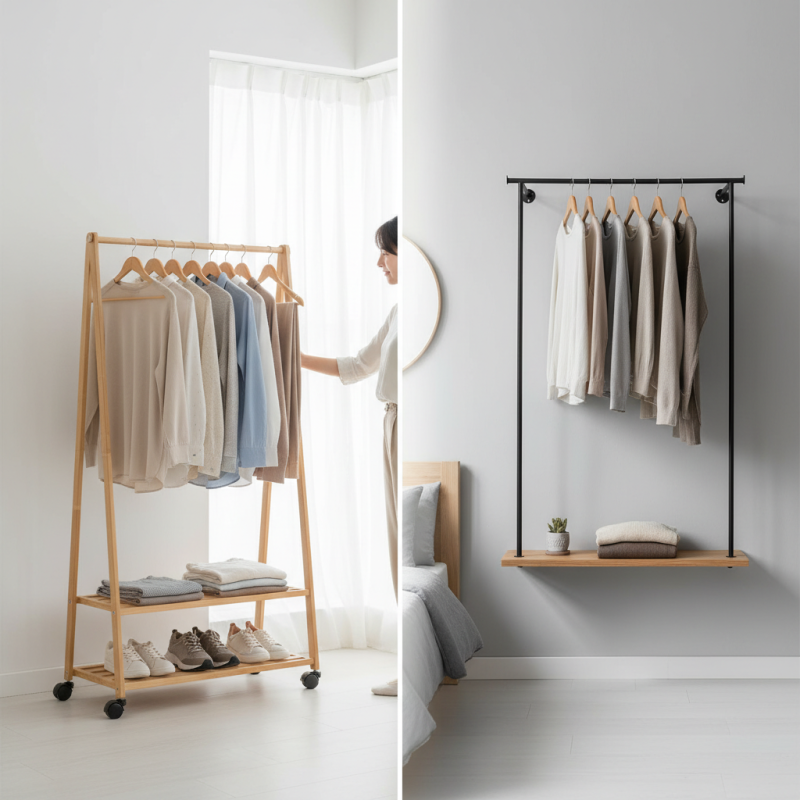
When it comes to choosing between floor-standing and wall-mounted hanger racks, understanding their differences is crucial. Floor-standing racks offer flexibility. They can be moved around easily. This option is ideal for spaces with changing layouts. However, they can take up significant floor space. If you have a small area, this could be a disadvantage.
On the other hand, wall-mounted racks save valuable floor space. They keep items off the ground and can create a clean look. These racks are often sturdier, providing a secure place for heavier items. Installation can be tricky, though. Improper installation may lead to stability issues. It’s important to assess your wall type before making a decision.
Consider the materials of each rack. Floor-standing racks may use lighter materials, making them portable. Wall-mounted racks usually require sturdier material to handle heavier loads. Each type has its strengths and weaknesses. Your lifestyle, space, and needs will ultimately guide your choice. Reflect on these factors before making a final decision.
When assessing space requirements for hanger rack installation, start by evaluating the area available. Measure your room dimensions carefully. A floor-standing rack requires more horizontal space but offers flexibility. It can be moved easily to accommodate different layouts. In contrast, a wall-mounted rack saves floor space. This can be ideal for smaller rooms or studios where maximizing area is crucial.
Consider the ceiling height as well. Floor-standing racks can become cumbersome if they exceed your room’s height. Meanwhile, wall-mounted options should be installed at a comfortable level for accessing hangers. Both types might need space around them for airflow. Think about how frequently you plan to use the rack. If it will be used daily, easy access becomes critical.
Assess the style and design of your space. A wall-mounted option can blend into your decor seamlessly, while a floor model may stand out more prominently. This might lead to some challenges in aesthetic alignment. Ensuring the chosen style complements your existing furniture can take extra thought. Ultimately, weighing these details can make the decision clearer.
| Aspect | Floor-standing Racks | Wall-mounted Racks |
|---|---|---|
| Space Requirements | Requires floor space; ideal for larger areas. | Saves floor space; best for smaller or limited areas. |
| Installation Complexity | Generally easier to install; no wall mounting required. | May require drilling; installation can be complex. |
| Aesthetic Appeal | Can be a statement piece; offers flexibility in placement. | Can blend into walls; often more minimalist in design. |
| Weight Capacity | Usually higher weight capacity; stable on the floor. | Capacity varies; dependent on wall structure. |
| Flexibility | Easily movable; can reconfigure layout as needed. | Fixed position; less flexible once installed. |
| Cost | Typically more expensive due to the materials used. | Generally more affordable; lower material costs. |
When selecting between floor-standing and wall-mounted hanger racks, it's essential to evaluate their weight capacity and stability. A floor-standing rack typically offers more stability and greater weight support. These racks distribute weight evenly across the floor. In contrast, wall-mounted options can save space but may be less sturdy. Understand that improper installation can lead to safety hazards.
Tip: Always check the weight capacity stated by the manufacturer. Make sure it matches your needs. Overloading a hanger rack can cause it to collapse, leading to damaged clothes and injury.
Wall-mounted racks require careful measurement and selection of wall studs. Ensure that the wall structure can support the weight. If you’re unsure, consult a professional for installation.
Tip: Consider using brackets that spread weight over a larger area. It enhances stability and reduces the risk of damage. Remember, user reviews can provide insights into actual performance. Don't ignore them. Trustworthy feedback helps in making informed decisions.
When choosing between floor-standing and wall-mounted hanger racks, design and aesthetics play a crucial role. Floor-standing racks often provide more flexibility in terms of placement. They can become a statement piece in a room. A report from the American Interior Design Association highlights that 70% of consumers consider the visual impact of furniture in their purchase decisions.
Wall-mounted racks, while more permanent, offer a sleek, modern aesthetic. They save floor space, making them ideal for smaller areas. Research from the National Association of Home Builders shows that well-organized spaces can lead to a 20% increase in perceived home value. This reinforces the idea that aesthetics are not just for style but can influence the overall perception of a space.
Tips for Selecting Layout: Consider the existing decor. Neutral colors can match various styles. For more color, choose vibrant options that add character. Also, think about your storage needs. Will you hang casual garments or formal pieces? Both types have their pros and cons.
Don’t neglect the potential drawbacks. Wall-mounted racks may limit flexibility if you change your decor later. Floor-standing options can take up valuable space in smaller homes. Weigh these aspects carefully when making your decision.
When considering between floor-standing and wall-mounted hanger racks, cost is a vital factor. Floor-standing racks typically range from $50 to $300, depending on the materials and design. A report by the Home Organization Industry Association found that consumer spending on storage solutions is expected to grow by 21% by 2025. This underscores the increasing importance of efficient storage choices.
Wall-mounted racks can offer a more economical option, with prices starting around $30. This style saves floor space, making it ideal for smaller areas. However, installation costs may add to your budget. A survey indicated that 40% of consumers overlook these hidden costs when planning their purchase. Also, wall-mounted solutions may require additional considerations like wall strength.
Ultimately, the choice must align with your specific space needs and budget. A careful evaluation of both initial costs and long-term utility is essential. Investing in quality products can mitigate the need for replacements, resulting in lower overall expenses. So, consider these aspects before making a decision.
This chart compares the average costs of floor-standing and wall-mounted hanger racks. The data indicates that floor-standing racks are generally more expensive, averaging around $150, while wall-mounted options average around $100, highlighting budget considerations when choosing between the two types.
: Evaluate weight capacity and stability. Floor-standing racks are more stable; wall-mounted options save space.
Overloading can cause collapse. This may damage clothes and result in injury. Always check the manufacturer's weight limit.
They depend on wall structure support. Improper installation can lead to safety hazards. Measure and choose wall studs carefully.
They offer placement flexibility and can serve as statement pieces. Their design can enhance room appeal.
Yes, organized and aesthetically pleasing spaces can increase perceived home value. Design matters in your choices.
Use brackets that distribute weight over a larger area. This reduces the risk of damage and improves stability.
Consider existing decor and color schemes. Neutral colors are versatile; vibrant colors can add character.
Yes, wall-mounted racks offer less flexibility. If decor changes, they may no longer fit the new style.
Consider what garments you'll hang, like casual or formal wear. Each rack type has pros and cons tied to storage.
User reviews provide insights into actual performance. They help ensure your choice meets practical needs and expectations.
When considering how to choose between floor-standing and wall-mounted hanger racks, it's essential to understand the core differences between these options. Floor-standing racks offer mobility and can typically hold larger quantities of clothing, while wall-mounted racks save floor space and can be aesthetically pleasing in a well-designed room. Assessing the available space for installation is crucial, as it determines which type of rack will fit best in your environment.
Furthermore, evaluating the weight capacity and stability of each option is vital, especially if you plan to hang heavy items. Design and aesthetic factors should also be considered, as they can influence the overall look of your space. Lastly, analyzing cost and budget implications will help you make a financially sound decision. By taking these factors into account, you’ll be better equipped to choose the right hanger rack for your needs.

Tianran Trade