Adjusting the height of your hanger rack is crucial for organizing various clothing lengths. According to Emma Smith, a renowned closet organization expert, "Proper hanger height can transform your wardrobe and improve visibility." Understanding "how to adjust hanger rack height for different clothing lengths" ensures each garment hangs properly without excessive wrinkles.
To achieve an efficient closet layout, consider the types of clothing you own. Long dresses require more space than shirts or jackets. Adjust the rack by measuring the longest garment you have. Ensure each item can be accessed easily. Limitations in space often lead to clutter, and misjudgments in height can create frustration.
Experiment with heights until you find what works for you. Not every adjustment will be perfect initially. It may take multiple tries to achieve the ideal setup. Embrace this process as a way to improve your wardrobe efficiency. By focusing on the right hanger rack height, you’ll protect your clothing investment while enjoying a more organized space.
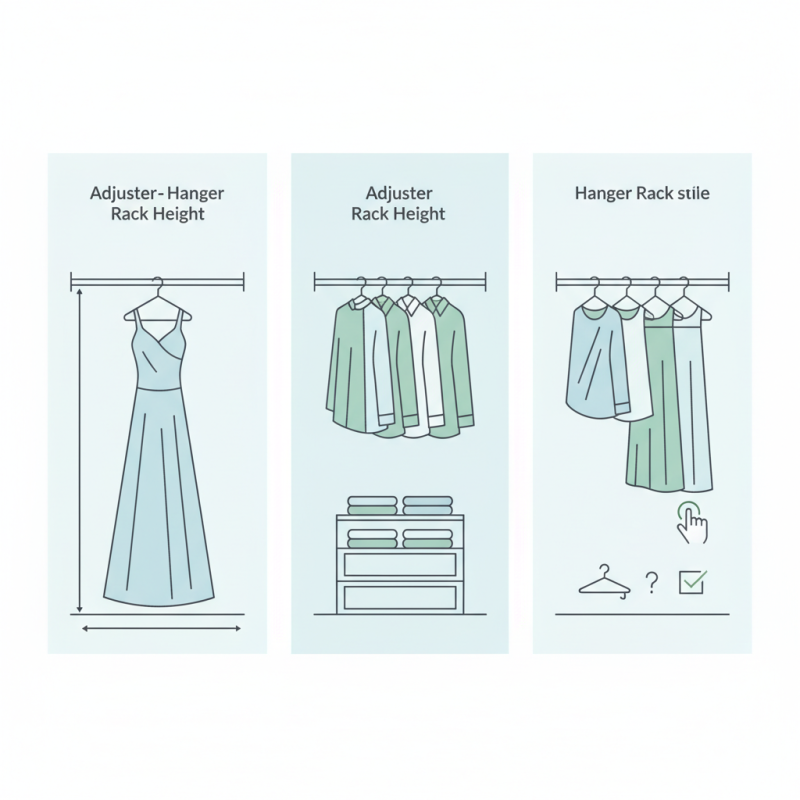
Proper hanger rack height is crucial for clothing preservation. When clothes hang at the right height, they maintain their shape. Clothes pressed against the rack can develop creases and wrinkles. This can especially affect delicate fabrics like silk and lace. Ensuring adequate space helps in avoiding these issues.
Adjusting the hanger rack height according to the clothing type is essential. For long dresses, the rack should be higher. This prevents dragging and snagging on the ground. Shorter garments, like tops, can hang lower. It provides visibility and easy access. Reflection on personal habits is necessary. Consider how often clothes get crushed or damaged based on current height settings.
Using a hanger rack at the correct height extends the life of clothing. It also improves daily routines. A cluttered space may tempt you to neglect adjustments. Regularly evaluate the rack position. Finding the ideal balance can take time. Small changes lead to significant improvements in garment care.
When adjusting hanger rack height, various factors come into play. Your wardrobe's size is crucial. Ideally, a standard height typically ranges from 65 to 70 inches. However, if you are tall or short, modifications may be necessary. Consider the type of clothing being hung. Long dresses require more space than blouses or shirts. Ensuring adequate clearance prevents wrinkles and maintains the clothing's shape.
Lighting and visibility are also important considerations. A well-placed hanger rack allows easy access to all items. Ensure the light source does not cast shadows on your clothing. Perhaps test different heights to find what works best. User experience may vary. You might think one height is perfect, but adjustments may be needed over time. It's wise to assess your wardrobe needs regularly and adjust accordingly.
Additionally, the type of hangers you use matters. Wooden hangers take up more space than plastic ones. This should influence your decisions. Some racks can be easily adjusted, while others may not offer flexibility. Reflecting on these aspects will help you establish a functional wardrobe. Embrace the process and remember that your needs may change.
Adjusting the height of your hanger rack can significantly enhance your closet's efficiency. Start by determining the type of clothing you hang most often. If you frequently use longer garments like dresses or coats, ensure the rack is set higher. For shorter items, a lower height may work better. Measure the lengths of your items to find a suitable rack height.
When you’re ready to adjust, gather the necessary tools. A tape measure, a screwdriver, and a level can help make precise adjustments. Loosen the rack brackets, and raise or lower the rack as needed. It’s crucial to ensure the rack is level once adjusted. A crooked rack can cause clothes to slide off or become wrinkled.
After you’ve made the adjustments, take a step back and assess the space. Consider whether the height allows for easy access. If your rack is still challenging to reach, you might need to rethink your setup. Adjusting the height may not yield perfect results immediately. However, minor tweaks can lead to an organized and user-friendly closet.
When adjusting hanger rack height, many common mistakes can compromise functionality. One frequent error is setting the rack too high. This position makes it challenging to access clothing for everyday use. If you need a step stool just to reach your favorite shirt, reconsider your setup. On the other hand, if the rack is too low, items may drag on the floor. This not only creates a mess but also damages garments.
Another mistake is overlooking the variety of clothing lengths. If a rack only accommodates standard shirts, longer pieces, like dresses, may remain wrinkled or bunch up. Assess your wardrobe before making adjustments. Be mindful of how often items are used, too. Frequently worn clothes should be easily reachable. This means dividing racks based on usage can enhance your daily routine.
Finally, neglecting to consider vertical spacing can be a setback. Overcrowded racks lead to frustration when selecting outfits. Ensure there’s enough room for airflow between garments. You may need to experiment with different heights until you find the perfect balance. Reflect on these aspects for a more efficient and effective clothing storage solution.
Maintaining optimal hanger rack performance is crucial for the longevity of your clothing storage system. Regular inspection of the rack's height adjustment mechanism is essential, as many systems can suffer from wear over time. A study by the American Apparel & Footwear Association indicates that proper maintenance can increase the lifespan of such equipment by up to 30%. Regularly lubricating moving parts and ensuring all fasteners are tight can prevent issues before they arise.
The right height adjustment not only improves efficiency but also protects your garments. Hanging clothes too high or low can result in creasing or damage. According to industry insights, improperly adjusted racks lead to a 15% higher risk of garment clutter. Keeping the rack at an ergonomic level allows for easier access, reducing strain during usage. Remember to inspect the hangers themselves, as worn or damaged hangers can contribute to a disorganized appearance.
Reflecting on your current rack setup may reveal potential shortcomings. Maintenance is not just about fixing issues—it’s also about creating an environment that supports your clothing care goals. Keeping a checklist for routine checks could significantly enhance your experience. This structured approach not only improves performance but can lead to better garment preservation.
: The right hanger rack height preserves clothing shape and reduces wrinkles. It prevents delicate fabrics from damage.
Long dresses need a higher rack to avoid dragging. Shorter garments can hang lower for visibility and access.
Consider wardrobe size, clothing length, and the type of hangers used. Ensure there's enough clearance for garments.
Proper lighting allows easy access to clothing and prevents shadows. Good visibility helps in making wardrobe choices.
Setting the rack too high or too low can hinder access and damage clothes. Consider garment lengths while adjusting.
Yes, regularly assessing and adjusting can improve usability and garment care. Your needs might change over time.
Overcrowded racks can frustrate outfit selection. They may cause wrinkles and make it hard to find clothes you need.
Yes, how often you wear items influences rack height decisions. Ensure frequently used clothes are easily accessible.
Wooden hangers take more space compared to plastic ones. This impacts how you organize and set your rack height.
Adjusting the height of your hanger rack is essential for the proper care of various clothing types. Understanding the optimal height can prevent creasing and maintain the shape of garments. Key factors to consider include the type of clothing, the space available, and the overall organization of your wardrobe. To learn how to adjust hanger rack height for different clothing lengths, follow a simple step-by-step guide that outlines the necessary adjustments while keeping functionality in mind.
Additionally, it's crucial to avoid common mistakes such as setting the rack too high or too low, which can lead to damage or inefficiency. Regular maintenance and inspection of the hanger rack will enhance its performance and longevity, ensuring that your clothing remains in the best condition possible. Adopting these practices will not only streamline your clothing storage but also extend the life of your garments.

Tianran Trade