How to adjust hanger rack height for different clothing lengths is a practical question with measurable effects. A 2024 IKEA Life at Home Report connects organized living spaces with stronger feelings of comfort and control. That finding matters in a wardrobe. A crowded rail can crease hems, hide garments, and waste vertical space. The American Society of Interior Designers also emphasizes function, accessibility, and user-centered storage in residential design guidance. However, there is no universal rack height. A petite user, a child, and a retail stylist need different solutions.
Professional organizer Andrew Mellen offers a useful principle: “A good system makes the right action the easy action.” Apply it by measuring the longest garment first. Dresses and coats may need 150 to 175 centimeters of clear hanging space. Shirts and folded trousers often need less. Leave several centimeters below each hem. That small gap prevents dragging on the floor. It also makes cleaning easier. For double-hang wardrobes, place the upper rail near 100 centimeters and the lower rail near 90 centimeters, then test both with real garments. Do not trust a tape measure alone. A winter coat can behave differently from a light summer dress. This is where many guides become too neat. Personal wardrobes are rarely neat. Recheck the height after one week of use, especially if sleeves catch on shelves or long clothes still bend at the bottom. A flexible system usually performs better than a perfect-looking installation.
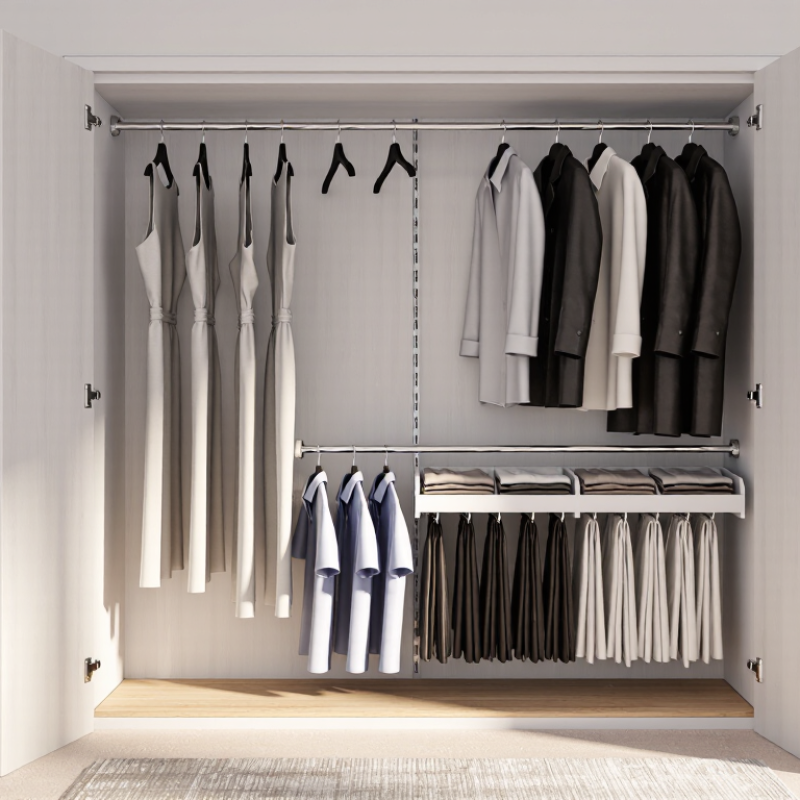
Identify each garment by its finished length, not its label. Measure from the shoulder seam to the hem. Short tops usually need 55–65 centimetres of vertical clearance. Shirts and jackets often require 75–90 centimetres. Folded trousers need about 70–85 centimetres. Midi dresses commonly need 110–125 centimetres, while maxi dresses may require 140–160 centimetres. Add 5–10 centimetres for movement, hangers, and fabric that does not hang perfectly straight.
Rack height should reflect the longest regular garment in the section. A double rail can hold shorter items at approximately 95–105 centimetres and a second rail near 175 centimetres. Long garments need a clear zone of roughly 150–170 centimetres. These are working ranges, not universal rules. ASTM D5219 helps standardize body measurements, but it does not define closet rack height. Measure several real garments before fixing the hardware.
Adaptability matters as wardrobes expand. The 2024 ThredUp Resale Report projects the global secondhand apparel market could reach 350 billion dollars by 2028. More varied garments can create uneven storage demands. The U.S. Environmental Protection Agency reported about 17 million tons of textile waste in 2018, with 11.3 million tons landfilled. Better spacing cannot solve waste alone, but it can protect clothing from crushing and make forgotten pieces visible. I once planned a rail around one dress. That shortcut failed when coats arrived. Leave some spare height.
How to Adjust Rack Height for Different Clothing Lengths
Measuring the rack accurately is the best starting point. Use a steel tape, not a flexible ruler. Record the floor-to-rail height at both ends and in the center. Uneven floors can create a small but important difference.
Measure the longest garment on its hanger. Add 5 to 8 centimeters of clearance below the hem. This space prevents dresses, coats, or trousers from dragging on the floor. Also check the rack’s usable adjustment range before choosing a method. Telescoping posts work well for frequent changes. Pin-lock holes offer stronger, repeatable settings. Threaded feet can correct minor floor differences, but they should not replace a height-adjustable frame.
Keep the rail level while adjusting it. A spirit level helps, especially on a wide rack. After setting the height, hang the heaviest items and inspect the joints. The frame should remain stable without leaning or twisting. Tighten each fastener evenly. Do not force a fitting that feels misaligned.
I once measured only the front of a rack. The rear leg stood slightly higher, and the rail looked level from a distance but was not. That mistake taught me to measure twice. Still, clearance depends on fabric shape, hanger thickness, and garment movement. A stiff coat may need more space than its flat measurement suggests. Test a few real garments before fixing the final height.
Measure the garment from the shoulder to the hem, then set the rack rod about 15 cm higher to provide practical floor clearance.
The chart compares typical garment lengths with suggested rack heights. These planning values use a simple adjustment rule: recommended rack height = garment length + 15 cm clearance. Use the lowest rack position that keeps the garment safely above the floor.
For short garments, set the rack rod about 100 to 120 centimeters above the floor. This height suits shirts, blouses, cropped jackets, and lightweight sweaters. Leave at least 10 centimeters beneath each garment. That gap keeps hems away from dust, shoes, and cleaning tools. It also makes the clothing easier to see.
Measure the garment from its shoulder seam to its hem. Add several centimeters for the hanger and movement. A 65-centimeter shirt may need a rod near 85 centimeters, depending on the hanger shape. In my own storage setup, I once placed the rod too high. The shirts looked tidy, but shorter users struggled to reach them. I lowered it by 10 centimeters, and daily handling became easier.
Use a stable measuring tape, not an estimate from eye level. Check the rack after loading it, because fabric weight can change the visual balance. Keep the lowest hem clear of the floor, even when sleeves hang unevenly. For children’s short garments, a lower rod near 70 to 90 centimeters may work better. The correct height depends on users, garment length, and room access.
Do not crowd the hangers. Short clothing still needs space between pieces. About 3 to 5 centimeters per garment helps prevent crushed shoulders and hidden colors. I prefer testing one section before adjusting the entire rack. That small trial can reveal mistakes early.
Adjusting rack height for dresses, coats, and long garments requires more than guessing. Measure the longest item while it hangs naturally, including its hem. Set the hanging rod high enough to leave 5 to 10 centimeters above the floor. This gap protects fabric from dust, dampness, and accidental dragging. A quick visual check helps, but measurements are more reliable.
Dresses usually need a medium-high setting, especially when layered with slips or underskirts. Coats need extra space because their heavier fabric can stretch downward. Leave room for broad shoulders and thick collars. Long garments should hang freely without touching shoes, boxes, or the lower frame. Keep the rack stable, and lock every height adjustment firmly.
I once adjusted a rack for a coat using its empty-shell length. After adding a scarf, the hem nearly touched the floor. That small mistake showed why accessories matter. Check the rack again after loading several garments. Weight can change its balance. If the rack wobbles, lower the height slightly or reduce the load. A neat appearance is useful, but fabric clearance and safe support matter more. I still recheck long dresses after steaming them, because relaxed fabric can hang lower than expected.
| Clothing Type | Typical Garment Length | Recommended Rack Height | Clearance Below the Garment | Adjustment Guidance | Best Use Case |
|---|---|---|---|---|---|
| Tops, Shirts, and Blouses | 60–75 cm | 100–115 cm | 10–20 cm | Set the hanging bar just high enough to keep hems away from the floor while allowing easy access to collars and sleeves. | Everyday clothing, compact wardrobes, and lower hanging sections. |
| Skirts and Short Dresses | 75–100 cm | 115–130 cm | 10–20 cm | Use a medium setting. Check the longest hem rather than the average garment length. | Short dresses, skirts, tunics, and coordinated outfits. |
| Trousers and Folded-Hanger Pants | 75–100 cm | 105–125 cm | 10–20 cm | Allow extra space if trousers are hung from the waistband or folded over a bar, because the fold changes the hanging length. | Dress trousers, jeans, and trousers stored on clip hangers. |
| Knee-Length Dresses | 95–115 cm | 130–145 cm | 15–25 cm | Raise the bar until the skirt hangs freely without touching shelves, drawers, or the floor. | Office dresses, cocktail dresses, and standard day dresses. |
| Midi Dresses and Long Skirts | 115–140 cm | 145–165 cm | 15–25 cm | Measure the longest point of an uneven hem and set the rack according to that point. | Midi dresses, pleated skirts, and garments with longer back panels. |
| Long Coats and Trench Coats | 105–135 cm | 145–165 cm | 15–25 cm | Use the upper range when coats are thick or worn over suit jackets. Keep bulky shoulders from pressing against the bar or ceiling. | Wool coats, trench coats, raincoats, and winter outerwear. |
| Maxi Dresses and Full-Length Garments | 135–155 cm | 165–180 cm | 15–25 cm | Choose the highest stable setting available. If the garment still reaches the floor, use a lower rack with a platform or fold the garment carefully over a suitable hanger. | Maxi dresses, formal gowns, robes, and full-length skirts. |
| Padded or Heavy Garments | 90–135 cm | 135–165 cm | 20–30 cm | Increase clearance to prevent fabric compression and leave enough vertical room for thick shoulders and layered clothing. | Down jackets, padded coats, thick knitwear, and layered outfits. |
| Children’s Clothing | 40–90 cm | 70–110 cm | 10–20 cm | Use a lower setting that lets children reach the garments safely. Recheck the height as clothing sizes change. | Children’s wardrobes, classrooms, and shared dressing areas. |
Adjust the rack height to match the longest garment, not the average one. Hang a coat, dress, and pair of trousers before making the final decision. Leave at least five centimeters between the garment hem and the floor. This small gap reduces dragging, dust, and accidental snagging.
Check stability before tightening every lock. Press the rack gently from each side. It should remain steady without rocking or sliding. Place heavier garments near the center, then test the rack again. If one leg lifts slightly, inspect the floor and adjust the levelers. Do not force the frame into position. That can create hidden stress.
Now fine-tune the final rack position. Move it a few centimeters away from walls, doors, and heating sources. Open nearby drawers and walk past it with full sleeves. I once positioned a rack correctly for clothes but blocked a cabinet door. That mistake was easy to miss. Leave enough clearance for hangers to move freely. After loading the rack, wait several minutes and check the joints again. A stable empty rack may shift under real weight. If the frame still moves, lower the height slightly or reduce the load. Test it twice. Safety details deserve another look.
Measure from the shoulder seam to the hem while the garment hangs naturally. Do not rely only on the clothing label.
Short tops usually need 55–65 centimetres. Shirts and jackets often need 75–90 centimetres. Add 5–10 centimetres for movement.
Folded trousers generally need 70–85 centimetres. Midi dresses need about 110–125 centimetres. Maxi dresses may require 140–160 centimetres.
Match the rack to the longest regular garment. Leave at least five centimetres between the hem and the floor.
Scarves, slips, and underskirts can lengthen or weigh down clothing. A coat may hang lower after accessories are added. Small details matter.
It works well for shorter garments. One rail can sit near 95–105 centimetres, with another near 175 centimetres. Long garments need a clear zone.
Press it gently from each side. It should not rock or slide. Place heavier garments near the center, then test it again.
Keep it away from doors, walls, and heating sources. Open nearby drawers and walk past it with full sleeves. Hangers need room to move.
Recheck the joints and floor levelers. Lower the rack slightly or reduce the load. I once blocked a cabinet door with a correctly measured rack. Measurement alone was not enough.
How to adjust hanger rack height for different clothing lengths begins with identifying the garments you plan to store. Short items such as shirts, skirts, and folded trousers need less vertical space, while dresses, coats, and other long garments require a taller hanging area to prevent dragging or wrinkling. Measure the rack, available floor space, and the longest clothing item before selecting an adjustment method, such as repositioning supports, changing the frame height, or using a suitable hanging section.
Set the rack lower for short garments to make daily access easier and maximize storage efficiency. For dresses, coats, and long clothing, raise the rack enough to keep hems clear of the floor while leaving room for hangers and movement. After making the adjustment, check that all joints are secure, the base is balanced, and the rack does not lean or wobble. Add or remove a small amount of height as needed until the garments hang freely and the rack remains stable.

Tianran Trade