 Tianran Trade
2026 Best Floor Standing vs Wall Mounted Hanger Racks?
Choosing the right rack can change how a room feels and functions in 2026. A crowded entryway needs more than attractive hardware. It needs clear capacity, safe loading, and easy daily access. This guide explores How to choose between floor-standing and wall-mounted hanger racks for homes, offices, boutiques, and compact apartments.
Professional organizer Peter Walsh offers a useful principle: “A place for everything, and everything in its place.” His advice applies directly to hanger storage. Floor-standing racks suit renters, flexible layouts, and heavier coats. They can move near a door, laundry area, or fitting room. However, they consume floor space and may wobble on uneven surfaces. Check the base width, frame material, wheel quality, and stated weight limit before buying.
Wall-mounted racks preserve valuable floor area. They work well in narrow corridors and busy commercial entrances. Stud placement matters. So does the wall material. A rack fixed into weak drywall may loosen after repeated use, even when it looks sturdy. Measure coat lengths, user height, and available clearance. Leave enough space for sleeves and doors.
There is no perfect winner. Not always. I once underestimated how quickly a family filled a seemingly generous rack. Seasonal clothing changed the result completely. That small mistake matters. A practical comparison should consider installation effort, cleaning, accessibility, appearance, and future capacity. The best choice is the rack that supports real habits, not an idealized room.
Define Floor-Standing and Wall-Mounted Racks Through 2026 Market Data
2026 Best Floor Standing vs Wall Mounted Hanger Racks?
Market data helps define the choice. Grand View Research reports continued growth in the global home furniture market through 2030, supported by smaller urban homes and flexible storage needs. Mordor Intelligence also identifies modular and space-saving storage as important furniture trends. These reports do not isolate hanger racks perfectly. That limitation matters.
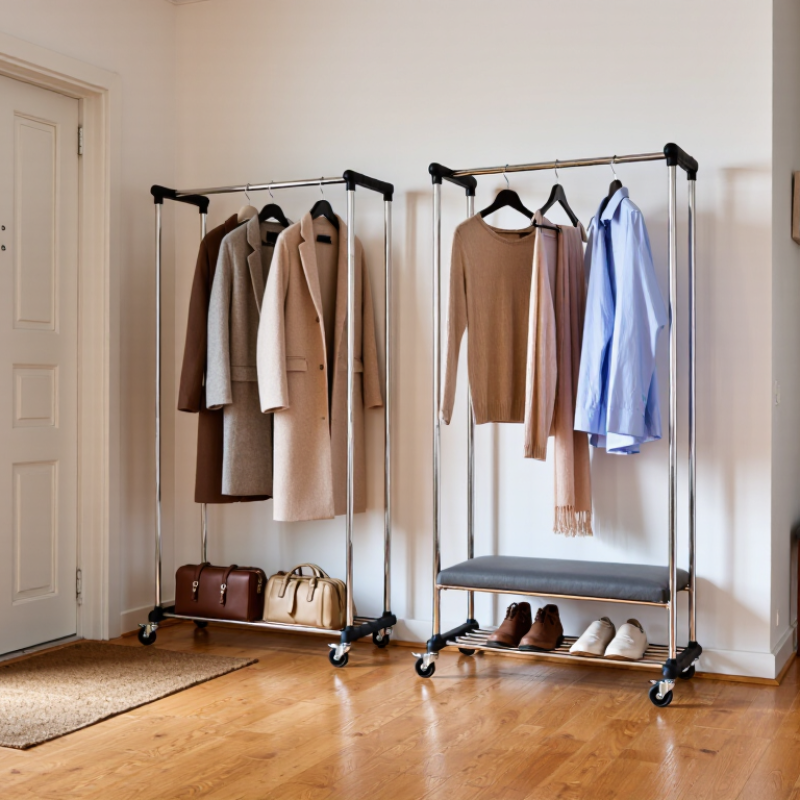
Floor-standing racks use the room’s footprint. They suit rental homes, retail backrooms, and entryways that need movable storage. A steel frame can hold heavy coats, bags, and seasonal clothing. However, poor weight distribution may cause wobbling. Wall-mounted racks transfer load into a wall, saving valuable floor space. They work well above a bench, inside a utility room, or near a narrow doorway. Installation quality becomes critical. Drywall alone may not support a loaded rack.
Tips: Measure the wall, ceiling height, and walking clearance before buying. Check the stated load rating, fixing method, and corrosion resistance. For daily use, leave roughly 20–30 centimeters between the rack and nearby obstacles. That small gap reduces snagging. I have found that users often compare appearance first, then discover access problems later. This is an imperfect buying habit, but it is common. Through 2026, market evidence favors adaptable storage, yet the best rack still depends on wall strength, garment volume, and how often the layout changes.
FAQS
It is a movable rack that uses floor space for coats, bags, and seasonal clothing. A steel frame may carry heavier garments. It needs a wide, firm base.
It attaches directly to a wall and keeps the floor clear. It suits narrow doorways, utility rooms, and spaces above benches. Strong wall support is essential.
A floor-standing rack usually works better because it can move without permanent wall changes. It suits changing room layouts. Still, a compact wall rack may save more space.
A wall-mounted rack often preserves walking space. Leave about 20–30 centimeters from nearby obstacles. That gap helps prevent snagging coats and bags.
Choose a wide footprint and place it on firm, level flooring. Hang heavy coats near the center. Avoid putting every bag on one end.
Small wheels can increase sliding and movement. Test the rack with damp jackets and several empty hangers. Push gently from the front and side.Watch the rear leg.
Drywall alone may not support a heavy load. Fasteners must match the wall structure, such as framing, masonry, or hollow panels. A strong screw cannot fix weak material.
Pull gently downward and outward on the loaded bar. Look for loose anchors, bent plates, or cracks around the fixing points. Recheck the installation after several weeks.
Measure wall width, ceiling height, garment volume, and walking clearance. Check the stated load rating and fixing method. Appearance should not lead the decision.Access problems appear later.
Real rooms create uneven forces that showroom tests may miss. Children pulling one sleeve or crowded doorways can stress the rack. Capacity claims deserve practical checking.
Conclusion
Choosing the right hanger rack in 2026 depends on how much storage you need, how much floor or wall space you have, and how securely the rack can be installed. Floor-standing racks generally offer flexible placement, easier relocation, and potentially greater capacity, while wall-mounted racks can preserve valuable floor area and create a cleaner layout. Manufacturer load ratings and EN 16122 testing principles should be reviewed to compare practical storage capacity and structural performance.
How to choose between floor-standing and wall-mounted hanger racks also requires evaluating accessibility and safety. Measure the usable reach area against the ADA’s 48-inch reach-range guidance, especially in shared or accessibility-focused spaces. For floor-standing models, consider base width, weight distribution, and tip-over resistance in line with ASTM F2057 safety principles. Finally, compare installation costs, expected durability, maintenance needs, and relevant BIFMA guidance. The best option is the rack that balances capacity, accessibility, stability, and long-term value for its specific environment.
