What Is the Best Hanger Rack for Heavy Winter Clothing?

Time:2026-10-27 Author:Isabella
0%

Choosing a rack for heavy winter clothing is more demanding than selecting a decorative closet accessory. Wool coats, down jackets, and leather outerwear create concentrated weight on a few rails. A weak frame may bend quietly. That is the dangerous part.

The 2024 Textile Exchange Materials Market Report estimated global fiber production at 124 million tonnes in 2023. It projects production could reach 160 million tonnes by 2030. More clothing means greater pressure on storage quality, especially in small homes and busy retail rooms. Industry research from Grand View Research also highlights continuing demand for home organization products. However, demand does not prove durability. A polished rack can still wobble on uneven flooring.

This guide explains How to choose hanger racks for heavy winter clothing through practical and technical criteria. We will examine load capacity, steel thickness, rail design, caster quality, base stability, and corrosion resistance. Check whether the stated weight applies to the entire rack or one rail. That distinction matters. A single long coat can pull a narrow rack sideways, especially when packed tightly with sweaters. OSHA’s material-handling guidance, including 29 CFR 1910.176(b), emphasizes secure storage against sliding or collapse in workplaces. Home users should apply the same safety mindset, even when rules differ. Measure the doorway, floor space, and coat lengths before purchasing. Leave room between garments. Airflow helps reduce compression and moisture buildup. No rack is perfect. The best choice balances verified capacity, stable construction, daily convenience, and the actual weight of your winter wardrobe.
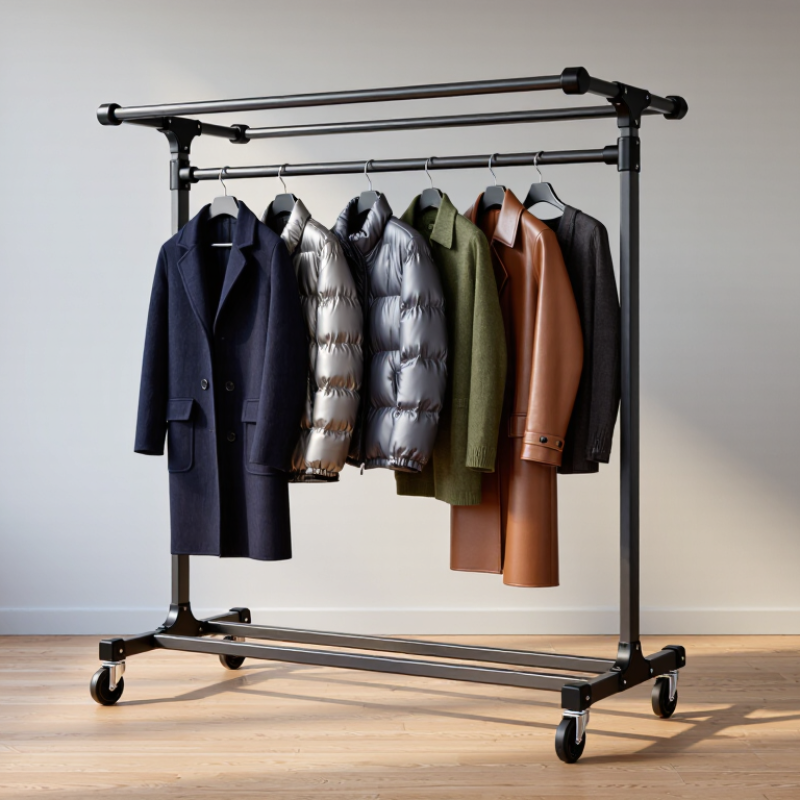
What Is the Best Hanger Rack for Heavy Winter Clothing?

Types of Hanger Racks for Heavy Winter Clothing

Heavy winter clothing needs more than a decorative rail. Wool coats, padded jackets, and wet boots create concentrated weight. A 2024 Grand View Research analysis places the global clothing-rack market at approximately US$1.8 billion, reflecting rising demand for organized home storage. Yet market growth does not guarantee safe design.

A freestanding single-rail rack suits occasional use and open rooms. Choose thick steel tubing, wide feet, and a stated load rating above your expected weight. A double-rail rack adds capacity, but crowded lower bars can scrape long coats. Wall-mounted racks save floor space and reduce wobbling. They need solid studs or suitable masonry anchors, not weak plaster alone. For heavier garments, a fixed wooden or metal rack usually feels more stable than a lightweight folding model.

Rolling racks are useful near laundry areas or entrances. Lockable casters matter on smooth floors. Industrial-style racks offer stronger frames, though their wheels may mark delicate flooring. The Business and Institutional Furniture Manufacturers Association emphasizes stability, durability, and declared performance in furniture testing guidance. However, many household racks provide limited testing details. That is a warning sign. I once chose a rack by appearance and ignored its narrow base; several winter coats pulled it sideways. Leave space between hangers, keep the heaviest garments near the center, and check the joints after installation. A little movement is normal. Excessive flexing is not.

Key Features of a Strong and Stable Hanger Rack

What Is the Best Hanger Rack for Heavy Winter Clothing?

A strong hanger rack begins with stability, not appearance. Winter coats can weigh several kilograms when wet, especially with boots or scarves nearby. Choose a steel frame with reinforced joints and a wide, weighted base. Casters should lock firmly. A narrow footprint may look tidy, but it can tip when one side holds several thick coats.

The U.S. Consumer Product Safety Commission reported 217 deaths involving furniture, televisions, and appliances tipping over between 2013 and 2022. Children represented 71% of those reported fatalities (CPSC, Tip-Over of Furniture, Televisions, and Appliances, 2013–2022). A clothing rack is not identical to a storage unit, yet the same safety lesson applies. ASTM F2057-23 also emphasizes stability and restraint principles for clothing storage units. My practical test is simple: load the rack gradually, then pull one coat from the end. If the frame twists or rolls, the design needs reconsideration. More metal does not always mean better balance.

Tips: Check the stated load capacity, not just the tube thickness. Keep heavy coats near the center. Lock every caster before loading. Test the rack on carpet and hard flooring, because performance can change. Wall anchoring may help in homes with children, although some racks are not designed for it. A small uneven floor can expose a serious weakness.

What Is the Best Hanger Rack for Heavy Winter Clothing?

Key Features of a Strong and Stable Hanger Rack

This chart estimates the load created by heavy winter clothing and the minimum recommended rack capacity. The estimate uses an average weight of 2 kg per winter garment and a 1.5× capacity margin for safer, more stable use. For frequent use, choose a rack with a reinforced steel frame, a wide base, locking casters or non-slip feet, and a rated capacity above the expected load.

How to Choose the Right Rack Size and Weight Capacity

What Is the Best Hanger Rack for Heavy Winter Clothing?

Choosing the right hanger rack starts with realistic measurements, not appearance. Measure your available floor space, doorway width, and ceiling height before shopping. Heavy coats need more shoulder room than shirts. Allow about 5 to 7 centimeters between bulky garments to prevent crushing and poor airflow. A rack measuring 90 to 120 centimeters wide suits a small collection. Larger wardrobes may need two racks instead of one overloaded frame.

Weight capacity deserves careful attention. Add the approximate weight of every coat, jacket, and hanger, then choose a rack rated at least 25% higher. Wet wool and padded clothing become surprisingly heavy. A strong steel frame, reinforced joints, and wide feet usually provide better stability. Locking wheels are useful, but smooth floors can still cause movement. I once underestimated the pull created by several long coats, and the rack leaned forward. The design looked sturdy. It was not enough.

Tips: Check the load rating for the whole rack, not one hook. Test the rack gently before filling it. Keep long garments above the floor, especially near heaters or damp entryways. Leave some unused space. This improves access and reveals weak points early. If the rack wobbles when empty, do not trust it with winter clothing.

Best Materials for Supporting Coats, Jackets, and Snow Gear

What Is the Best Hanger Rack for Heavy Winter Clothing?

A dependable rack needs more than a strong-looking frame. Powder-coated steel usually supports heavy coats, insulated jackets, and snow gear without bending easily. The coating also helps resist scratches and light moisture. Stainless steel handles damp environments better, though it often costs more. Solid hardwood can support winter clothing well when its joints are reinforced with metal hardware. Avoid thin tubing and weak plastic connectors. They may flex under several loaded hangers.

Tips: Check the rack’s weight rating before buying. Leave space between garments for airflow. Place wet snow pants on a ventilated section, not against polished wood. Rubber feet can prevent sliding on tile floors. I also prefer wide, rounded hangers because narrow edges create pressure marks on thick shoulders. Small details matter.

In my experience, construction quality matters as much as the material itself. A steel rack with loose bolts can fail sooner than a carefully joined wooden rack. I once chose a rack by appearance and ignored its narrow base. Heavy coats made it wobble whenever someone opened a closet door. That was a useful mistake. Look for cross-bracing, stable feet, and corrosion-resistant fasteners. For garages or entryways, coated steel is usually practical. For dry bedrooms, reinforced hardwood can feel warmer and quieter. No material is perfect. Moisture, poor assembly, and uneven floors can reduce performance.

What Is the Best Hanger Rack for Heavy Winter Clothing? - Best Materials for Supporting Coats, Jackets, and Snow Gear

Rack Material Typical Static Load Capacity* Best Use Strengths Limitations Recommended Features
Powder-Coated Steel Approximately 90–180 kg per rack, depending on tubing and frame design Multiple heavy coats, ski jackets, boots, and snow gear High strength, good rigidity, scratch-resistant finish, and strong value May rust if the coating is damaged and moisture reaches the steel Thick tubing, reinforced joints, adjustable feet, and a corrosion-resistant coating
Stainless Steel Approximately 75–150 kg per rack, depending on grade and construction Wet snow clothing, entryways, utility rooms, and humid environments Excellent moisture resistance, durable surface, and easy cleaning Usually more expensive and may be less rigid than heavy structural steel at the same weight Welded joints, wide feet, a lower storage shelf, and non-marking floor pads
Aluminum Approximately 45–90 kg per rack, depending on profile and bracing Portable racks, temporary storage, and moderate winter clothing loads Lightweight, naturally corrosion-resistant, and easy to move Less rigid than steel and more likely to flex under concentrated loads Triangular bracing, locking casters, a broad base, and a clearly stated load rating
Solid Hardwood Approximately 45–90 kg per rack when properly joined and braced Residential hallways, decorative entryways, and dry indoor spaces Attractive appearance, good rigidity, and warm interior styling Can absorb moisture, requires stable joints, and is less suitable for dripping wet gear Sealed finish, cross-bracing, wide feet, and a ventilated lower shelf
Reinforced Plastic or Resin Approximately 20–60 kg per rack, depending on frame thickness and reinforcement Light-to-moderate clothing loads and occasional seasonal use Low cost, lightweight, moisture-resistant, and easy to clean More susceptible to bending, cracking in cold conditions, and joint wear Metal-core supports, thick connectors, a low center of gravity, and indoor use
Wall-Mounted Steel Rail Approximately 45–135 kg per rail when anchored into structural framing or masonry Small entryways and permanent storage for heavy coats Excellent floor space efficiency and low tipping risk when correctly installed Capacity depends heavily on wall material, anchors, and installation quality Structural-wall mounting, evenly spaced hooks, and corrosion-resistant hardware

*Load capacities are practical comparison ranges for well-constructed racks. Actual capacity varies with tubing diameter, wall thickness, joint quality, base width, fasteners, and how evenly the weight is distributed.

Best overall choice: Powder-coated steel is generally the strongest all-purpose option for several heavy winter coats and snow gear. Stainless steel is preferable where wet clothing and frequent moisture exposure are expected, while a wall-mounted steel rail is ideal when floor space is limited and the wall can support the required load.

Safety and Maintenance Tips for Heavy Clothing Racks

For heavy winter clothing, a rack needs more than a thick-looking frame. Choose a steel or reinforced frame with a published load rating, a broad base, and secure locking casters. Stability comes first. Place the rack on a level floor, keep its feet clear, and anchor tall units when children, pets, or frequent traffic are nearby. Never hang wet coats in a dense cluster; trapped moisture adds weight and encourages mildew.

Load clothing evenly across the bar. Keep heavier coats near the supports, not in one crowded corner. Do not guess. If the bar bends, joints shift, or wheels roll unexpectedly, remove the garments and stop using the rack. Inspect bolts, welds, hooks, and end caps every week during winter. A small crack can become a sudden collapse. I would also test the rack gently by hand, although this check cannot replace the manufacturer’s load guidance.

Maintenance is simple but easy to neglect. Wipe salt, mud, and moisture from metal parts with a soft cloth, then dry them fully. Clean casters and remove threads that restrict movement. Tighten loose fasteners with the correct tool, rather than forcing them. Avoid harsh chemicals that may damage protective finishes. Check it weekly. In humid rooms, inspect hidden joints for rust and use only a suitable maintenance product. One mistake is treating a rack as permanent furniture; seasonal loads and repeated movement change its condition. Replace damaged parts promptly, even when the rack still appears usable.

FAQS

What makes a hanger rack suitable for heavy winter clothing?

Choose a steel or reinforced frame with a published load rating. Stability matters more than appearance. A wide base helps prevent tipping.

How should heavy coats be arranged on the rack?

Place heavier coats near the supports. Spread clothing evenly across the bar. Avoid one crowded corner.

Can wet winter coats overload a hanger rack?

Yes. Wet coats become heavier and trap moisture. Hang them with space between garments, then dry the rack afterward.

Should the casters be locked before loading clothing?

Yes. Lock every caster before adding coats. Test the rack on carpet and hard flooring.

How can I test a rack’s stability?

Load it gradually, then pull one end coat gently. If the frame twists or rolls, stop using it.

Does a thicker metal tube guarantee a stronger rack?

No. More metal does not always mean better balance. The base, joints, and load rating also matter.

When should a tall rack be anchored?

Consider anchoring it near children, pets, or busy walkways. Check whether the rack is designed for anchoring.

How should a hanger rack be maintained during winter?

Inspect bolts, welds, hooks, and end caps weekly. Wipe away salt, mud, and moisture. Dry metal parts completely.

What signs mean the rack may be unsafe?

Watch for bent bars, shifting joints, loose fasteners, cracks, rust, or unexpected wheel movement. Remove clothing immediately.

Is a hand stability test enough?

No. It is useful, but imperfect. Follow the stated load guidance and replace damaged parts promptly.

Conclusion

Choosing the best hanger rack for heavy winter clothing requires careful attention to strength, stability, size, and materials. Common options include freestanding garment racks, wall-mounted racks, and adjustable double-rail designs. A strong rack should have a reinforced frame, secure joints, a wide base, and non-slip feet to prevent tipping under the weight of thick coats, jackets, boots, and snow gear. Metal is often a reliable choice for heavy loads, while solid wood can provide durability and a warmer appearance when properly constructed.

To understand how to choose hanger racks for heavy winter clothing, first estimate the total weight and volume of the garments you plan to store. Select a rack with a weight capacity well above your expected load and enough hanging space to prevent overcrowding. Check that its height and width fit your room, and leave clearance for easy movement. Regularly tighten screws, inspect welds or joints, distribute clothing evenly, and avoid placing unstable or overloaded racks in busy walkways.

Isabella

Isabella

Isabella is a dedicated marketing professional with a sharp focus on driving brand growth and engagement through strategic content creation. With an extensive background in digital marketing, she combines her passion for storytelling with her keen understanding of industry trends to deliver......